
DEMENTIA PATiENTS’ BASIC RIGHTS
When someone receives a dementia diagnosis, whether Alzheimer’s, Parkinson’s-related dementia, or another form, it can feel like the focus immediately shifts to their symptoms, safety, and decline. But a diagnosis does not diminish a person’s humanity, individuality, or rights.
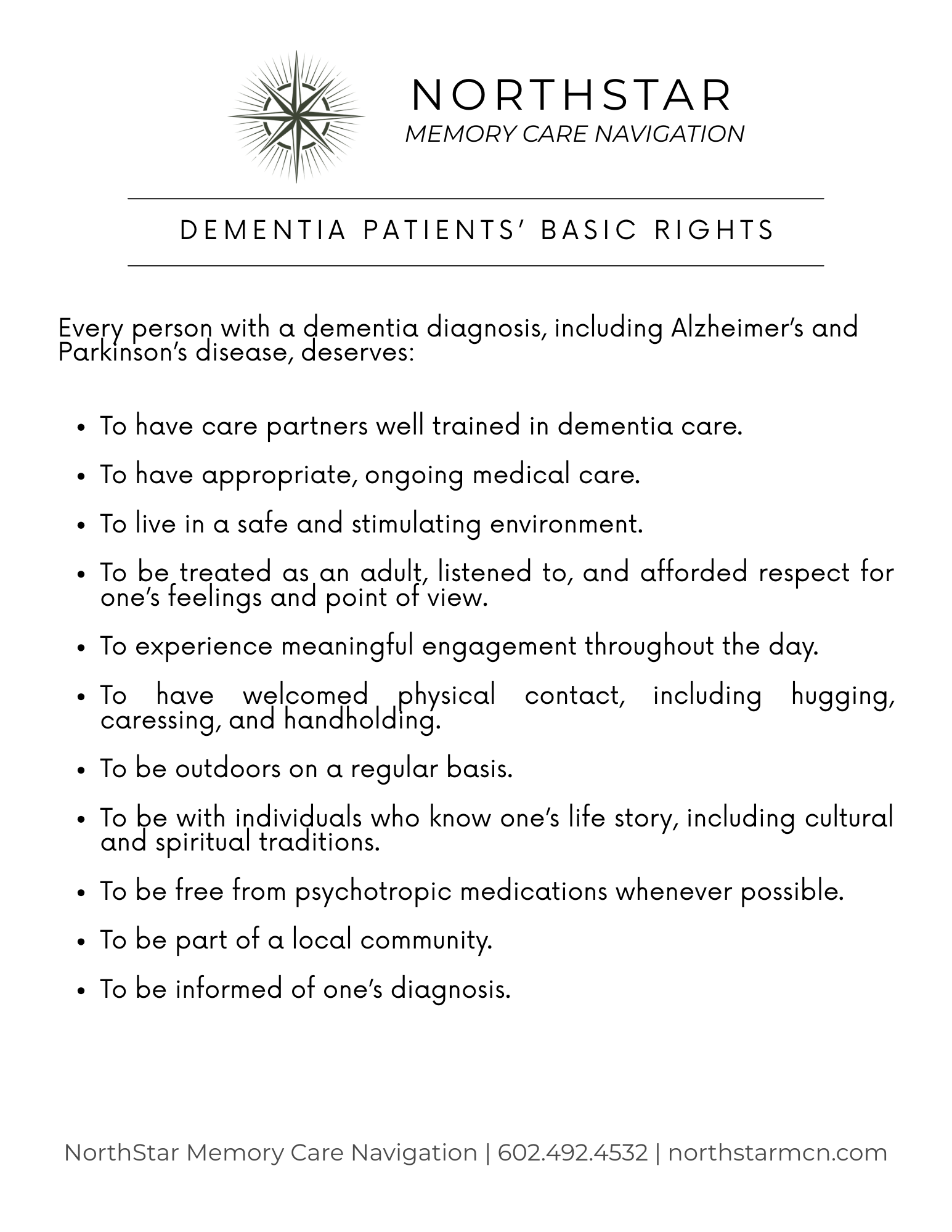
Every person living with dementia deserves care rooted in dignity and respect.
That means having care partners who are properly trained in dementia care and receiving appropriate, ongoing medical support. It means living in an environment that is not only safe, but stimulating and engaging. Safety alone is not enough—quality of life matters.
People with dementia deserve to be treated as adults.
They deserve to be listened to. Their feelings, preferences, and point of view remain important, even as communication changes. Meaningful engagement throughout the day—conversation, music, art, time outdoors, spiritual connection—should be a priority, not an afterthought.
Human connection is essential.
Welcomed physical contact such as a hug, holding hands, or a reassuring touch can provide comfort and grounding. Being surrounded by people who know one’s life story, cultural background, and spiritual traditions ensures care is personal, not generic.
They also deserve thoughtful medical oversight, including freedom from unnecessary psychotropic medications whenever possible. They deserve inclusion in their local community. And importantly, they have the right to be informed about their diagnosis.
Dementia changes many things. But it does not erase a person’s identity, worth, or voice.
Upholding these basic rights isn’t extraordinary care—it’s the standard every individual living with dementia should expect and receive.
